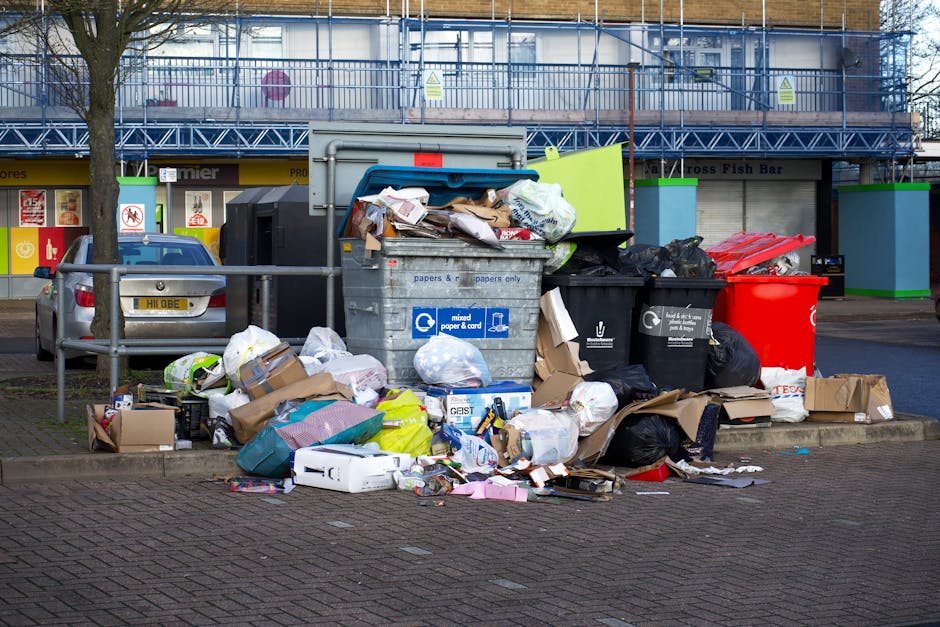
Maltby Street Market clear outs rubbish collection Bermondsey

Maltby Street Market has a rhythm of its own: early deliveries, busy food traders, last-minute resets, and the constant need to keep walkways clear. When a stall, unit, or nearby business needs a proper clear out, rubbish collection in Bermondsey has to be quick, tidy, and handled with very little disruption. That is exactly where Maltby Street Market clear outs rubbish collection Bermondsey becomes more than a phrase - it is a practical, local problem that needs a practical answer.
Whether you are dealing with packaging, broken fixtures, old stock, catering waste, cardboard, or a stubborn pile of mixed rubbish that has built up faster than expected, the aim is the same: clear it safely, remove it efficiently, and leave the space ready for work. In busy parts of Bermondsey, that often means planning around access, timing, and disposal rules rather than simply "getting rid of stuff." Let's face it, the last thing anyone wants on a market day is a skip blocking the flow or rubbish hanging around for one more service cycle.
This guide explains how market clear outs and rubbish collection typically work, what to watch out for, who needs the service, and how to choose the right approach for your site. It also covers common mistakes, useful checks, and a realistic view of compliance and best practice so you can make a sensible decision without guesswork.
Why Maltby Street Market clear outs rubbish collection Bermondsey Matters
Maltby Street Market is not a generic commercial site. It is compact, active, and shaped by foot traffic, food service, and tight working windows. That matters because rubbish collection is not just about lifting bags. It is about keeping a trading environment safe, presentable, and workable in a place where space is already at a premium.
A clear out in this kind of setting can involve more than one type of waste at once. You may have old shelving, damaged packaging, disposable food service items, broken pallets, out-of-date stock, cardboard, sack waste, or even bulky items from a refit. If you leave those pieces to stack up, the problems arrive quickly: blocked access, trip hazards, odours, pest risk, and a general sense that the site is getting away from you.
In Bermondsey, timing also matters. A lot of clear outs happen before service starts, after closing, or in a narrow reset window when every minute counts. That is why a thoughtful rubbish collection plan is often worth more than a rushed one. You want the job done cleanly the first time, not revisited because a corner was missed or a load was split badly. Sounds simple, but in busy market settings it rarely is.
Expert summary: The best market clear outs are the ones that remove clutter without disrupting trade, protect staff and visitors, and keep disposal organised from the start. Efficiency is good. Reliability is better.
If your business also needs broader support beyond a single clean-up, it can help to look at related services such as business waste removal and general waste removal, especially where day-to-day and ad hoc waste are being managed together.
How Maltby Street Market clear outs rubbish collection Bermondsey Works
Most clear outs follow a practical sequence. First, you identify what needs to go. Then you sort it into categories that can be handled safely and legally. After that, the collection is scheduled to fit the site, the access conditions, and the amount of waste involved. That is the short version. In real life, there are usually a few more moving parts.
For a market environment, the work often begins with a quick site walk. This helps establish whether rubbish is spread across a stall, tucked behind counters, stored in a back area, or mixed through a storage room. It also shows whether there are stairs, narrow passageways, shared entrances, limited loading space, or items that need two people to move. You would be surprised how often the access plan matters more than the weight of the load.
Then comes the sorting stage. Not everything should be treated the same. Cardboard, furniture, catering equipment, broken fixtures, and potentially hazardous items all need different handling. A good clear out is organised enough to protect the team, but flexible enough to cope with the mess that real premises generate. That can be a bit untidy at first, but that is normal.
Finally, the waste is removed and taken to the appropriate disposal or recycling route. Where possible, recyclable materials should be separated from mixed waste. Reusable items may be diverted from disposal if they are in suitable condition. The goal is not simply to empty the space. The goal is to empty it responsibly.
If you are comparing disposal routes, it may also help to review recycling and sustainability and, where bulky items are involved, furniture clearance or furniture disposal.
Key Benefits and Practical Advantages
A well-run rubbish collection service for Maltby Street Market clear outs brings more than a tidy space. It improves how the site functions, how it feels to customers, and how quickly the next operational task can happen. That is the real value.
- Less disruption to trading: waste is removed in a planned way, instead of sitting around and getting in the way.
- Safer walkways and work areas: fewer trip hazards, less obstruction, and less chance of staff squeezing around piled items.
- Better presentation: a clean, uncluttered market space simply feels more professional.
- Faster turnarounds: useful when a stall is changing hands, refitting, or resetting for a busy weekend.
- More sensible disposal: recyclable and reusable materials can be separated instead of thrown together.
- Less stress for staff: nobody enjoys ending a long day by trying to puzzle out where a pile of waste should go.
There is also a less obvious benefit: better confidence. When the clear out is handled properly, everyone knows the space has been reset with care, not just hurried through. That matters when traders, owners, and contractors all need to keep a good relationship with the premises and with one another.
In some cases, the service can be extended to related needs too. For example, if a stall has old desks, files, or storage furniture, you may want to combine the work with office clearance or even confidential shredding where sensitive paperwork is involved.
Who This Is For and When It Makes Sense
This kind of service is useful for a wide range of people, and not only for obvious "big clear out" situations. In practice, the need often appears in small, awkward moments. A trader closes for refurbishment. A storage cupboard has become unusable. A food unit replaces counters and suddenly there is broken timber and packaging everywhere. The rubbish is not dramatic, just persistent.
Maltby Street Market clear outs rubbish collection Bermondsey may make sense for:
- market traders clearing stock, packaging, or damaged equipment
- cafes, food stalls, and hospitality units dealing with back-of-house clutter
- landlords or managing agents preparing a unit for re-let
- contractors carrying out light refurbishment or strip-out work
- business owners who have fallen behind on waste and need a reset
- anyone handling bulky or mixed rubbish that is awkward to move
It also makes sense when a waste issue has started to affect trading flow. If staff are stepping around bags or customers are seeing overspill near entrances, that is a clear sign the site needs attention. Truth be told, most people wait too long. A small problem becomes a messy one because it stays in the corner, quietly becoming everybody's problem.
For larger premises or property-wide resets, you may want to look at house clearance, home clearance, or flat clearance if the clear out extends beyond a single commercial unit.
Step-by-Step Guidance
Here is a practical way to approach a market clear out without making it more complicated than it needs to be.
- Walk the site and list the waste. Split it into bulky items, mixed rubbish, cardboard, reusable materials, and anything that may need special handling.
- Check access and timing. Is there a loading bay, rear access, shared corridor, or only a narrow entrance? Can the collection happen before opening or after service?
- Decide what should be kept separate. Good separation saves time later and makes recycling easier.
- Identify risk items early. Broken glass, sharp metal, food residues, old fridges, chemicals, or suspect waste need extra care.
- Estimate volume honestly. A load that looks "small enough" from one angle can be three times bigger once it is gathered properly. Happens all the time.
- Prepare the area. Move staff items, protect floors where needed, and make sure the path to the collection point is clear.
- Book the service and confirm the details. Make sure the collection team knows what is being removed and what access limitations they will face.
- Finish with a final sweep. After the rubbish is out, check the corners, behind counters, and under shelving. That last ten minutes is often the difference between "cleared" and "properly cleared."
If you are unsure what can safely go with mixed waste, it is worth checking guidance such as what can go in a skip. Even if you are not using a skip, the separation logic is still useful.
Expert Tips for Better Results
A few small decisions can make a clear out run much smoother. In our experience, the sites that go best are the ones that prepare a little, not the ones that hope for the best and then panic at collection time.
- Label odd items before the team arrives. If something must be kept, repaired, or checked by a manager, mark it clearly.
- Keep recyclable cardboard dry and separate. Wet cardboard becomes awkward fast and takes up more space than it should.
- Stack bulky items in a safe, stable way. Loose piles can collapse when moved. Nobody enjoys that sound.
- Take photos before and after. Handy for record-keeping, landlord handover, or just peace of mind.
- Plan for dead time around service windows. Even a short delay can affect customers if it hits the wrong 15 minutes.
- Use the right service for the waste type. A one-size-fits-all approach usually costs more time than it saves.
If your clear out includes heavy household-style furniture or tired soft furnishings from a commercial fit-out, services like mattress and sofa disposal can be the better fit than trying to force everything into a general load.
And yes, it helps to have one person who knows what is staying and what is going. Otherwise everyone stands around asking, "Is this going too?" for the fifth time. Standard scene, honestly.
Common Mistakes to Avoid
The biggest mistakes are usually not dramatic. They are the small, avoidable ones that create friction, delay, or extra cost.
- Mixing everything together. When recyclable, reusable, and general waste are piled into one mess, sorting takes longer and disposal is less efficient.
- Ignoring access limitations. A van or team may be ready, but if the route is blocked or a key gate is locked, the job stalls.
- Underestimating bulky waste. One broken fridge, one heavy cabinet, or one stack of old shelving can change the whole plan.
- Leaving special items until the end. Hazardous or awkward materials need advance handling, not a last-minute scramble.
- Forgetting about operating hours. Market sites and surrounding streets can be busy. Timing is part of the job.
- Not checking paperwork or internal approvals. If a landlord, site manager, or franchise owner needs sign-off, get that sorted early.
Another common issue is assuming that any waste collector can handle every kind of material. That is not always true. If the load includes sharp debris, old appliances, or potentially hazardous waste, it needs the right process. A quick conversation beforehand saves a lot of hassle later.
Tools, Resources and Recommendations
You do not need a complicated toolkit for a good market clear out. What you do need is a sensible setup and a few basic resources that keep the job moving.
- Sturdy bags and containers: useful for loose rubbish and smaller mixed items.
- Gloves and basic protective gear: helpful when handling sharp, dirty, or dusty waste.
- Trolleys or dollies: practical for heavier items and reducing strain on staff.
- Labels or tape: simple but effective for separating keep, dispose, and review items.
- A written waste list: even a quick one helps avoid confusion during collection.
- A clean route to the loading point: it sounds obvious, yet this is one of the first things to go wrong.
For businesses wanting a more structured waste plan, it can be useful to review the provider's policies around insurance and safety, health and safety, and payment and security. Those pages help set expectations and reduce surprises.
If you want a straightforward place to start, the book online route can be convenient for routine work, while pricing and quotes is useful when you need to compare options before committing.
Law, Compliance, Standards, or Best Practice
Waste handling in the UK is not just a logistical task. It also has compliance implications, especially for businesses. The exact obligations will depend on the type of waste, how it is stored, and who is responsible for it, so it is wise to follow current UK practice rather than making assumptions.
For market and commercial clear outs, the safest general approach is:
- keep waste contained and do not block emergency or customer routes
- separate recyclables where practical
- treat hazardous or sharp waste with extra caution
- use a provider that can handle the waste type properly
- retain any internal records you need for business or property management purposes
Where waste may be sensitive or regulated, such as confidential papers, refrigeration units, or materials requiring special handling, it is sensible to match the service to the waste stream rather than pushing everything into one collection. This is where pages like fridge and appliance removal and hazardous waste disposal become relevant.
Best practice is also about professionalism. A tidy collection, careful lifting, and clear communication are not extras. They are the basics. If you are operating in a busy place like Bermondsey, the basics matter even more.
Options, Methods, or Comparison Table
There are a few common ways to handle clear outs and rubbish collection around Maltby Street Market. The right one depends on volume, access, urgency, and the type of waste. Here is a simple comparison.
| Method | Best for | Strengths | Limitations |
|---|---|---|---|
| Ad hoc rubbish collection | Small to medium mixed waste loads | Flexible, quick, good for one-off clear outs | Needs good planning if access is tight |
| Scheduled business waste support | Ongoing market or hospitality waste | More consistent, easier to manage long term | May not suit sudden strip-outs or bulky items |
| Bulky item clearance | Furniture, fixtures, appliances | Handles heavy objects and awkward pieces | Not ideal for loose everyday rubbish alone |
| Full unit clearance | End-of-lease, closure, refurbishment | Thorough reset, suited to larger jobs | Needs more coordination and a clearer plan |
For many traders, the best answer is a hybrid approach: separate day-to-day waste from a one-off clear out, then book the specialist collection that matches the real problem. That often saves time and avoids paying for the wrong kind of service.
Case Study or Real-World Example
Here is a realistic example from a Bermondsey-style market unit. A food trader has just finished a small refit. The back area now contains broken display shelves, packaging, old shelving offcuts, a damaged undercounter unit, and several bags of mixed rubbish. Nothing is wildly unusual, but the space is cramped and the collection needs to happen before opening.
Instead of trying to drag everything out in a rush, the team does a quick sort first. Cardboard is bundled separately. The heavy unit is moved out with two people, not one. Loose rubbish is bagged. A few items that might be reused are set aside for review. The route to the loading point is checked, and the collection is timed for a quiet window before the lunch rush. It is not glamorous. It is just efficient.
The result? The stall reopens with a clear working area, staff can move properly behind the counter, and the manager is not left apologising for clutter at the front door. Small win, but a real one. That is often how good clear outs feel in practice - less like a dramatic event and more like a relief you notice the moment it is done.
If the clear out had included office-style records or paperwork, the trader could have paired the job with confidential shredding to keep everything neat and compliant.
Practical Checklist
Use this checklist before your collection day. It keeps things calm, which is underrated if you are juggling customers, deliveries, and limited space.
- List all waste items and split them by type
- Check access routes, doors, stairs, and loading space
- Identify anything heavy, sharp, wet, or potentially hazardous
- Separate recyclable cardboard and reusable items where possible
- Remove staff belongings and anything that must be kept
- Confirm timing so collection does not clash with trading
- Make sure floors and walkways are clear
- Keep one person responsible for sign-off on the day
- Prepare any needed paperwork or internal approval
- Do a final sweep before and after the collection
A small bit of preparation makes the difference between a smooth reset and a slightly chaotic one. And to be fair, nobody needs more chaos in a busy market morning.
Get a free quote today and see how much you can save.
Conclusion
Maltby Street Market clear outs rubbish collection Bermondsey is really about keeping a busy local trading environment under control. When waste is removed promptly, safely, and with a proper plan, the whole site works better. Customers see a tidier space, staff have fewer obstructions, and managers spend less time firefighting small messes that have grown too large.
The smartest approach is usually the one that matches the site realities: access, timing, waste type, and volume. Not every job needs the same solution, and not every pile of rubbish should be treated as routine. Once you understand what needs clearing, the rest becomes much easier.
If you are preparing for a clear out now, start with the basics: sort the waste, check access, and choose a collection route that fits the way the site actually operates. Simple enough on paper, but it pays off in the real world. And when the space is finally clear again, you will feel it straight away.
A clean working area changes the day more than people expect.
Frequently Asked Questions
What does Maltby Street Market clear outs rubbish collection Bermondsey usually include?
It usually includes mixed rubbish, cardboard, packaging, broken fixtures, unwanted stock, and bulky items that need to be removed from a market stall or nearby business space. The exact load depends on the site, but the common thread is a need for fast, tidy removal.
Is this service only for market traders?
No. It is useful for nearby cafes, hospitality units, landlords, managing agents, contractors, and businesses in Bermondsey that need a one-off clear out or a site reset. Traders are a big part of it, but not the only users.
Can food and hospitality waste be removed during a clear out?
Yes, but it should be separated sensibly. Food residues, packaging, and general refuse may all need different handling. If the waste includes anything unusual or potentially hazardous, it should be flagged early so the right collection approach is used.
What should I do with bulky items like shelves or old counters?
Keep them separate from loose rubbish if possible and make sure access is planned before collection day. Bulky items often need two people and a clear route out, especially in tight Bermondsey premises. It saves a lot of back-and-forth.
How do I know whether I need general waste removal or a full clear out?
If you are only dealing with everyday rubbish, general waste removal may be enough. If the space has accumulated bulky, mixed, or unusual items, or if it needs a reset before reopening or re-letting, a full clear out is usually the better fit.
Can recyclable materials be separated during the collection?
Often yes, and that is usually the better approach. Cardboard, some plastics, and reusable items should be kept apart where practical. This helps reduce unnecessary disposal and keeps the job more organised.
What if the unit has limited access?
Limited access is common in market settings, so it should be discussed in advance. Narrow entrances, stairs, shared corridors, or restricted loading space can all affect how the collection is carried out. A good plan makes a big difference.
Do I need to prepare anything before the team arrives?
Yes. The most useful preparation is sorting waste, clearing access routes, and identifying items that must be kept. A quick site walk and a simple list of what is going out will make the job smoother and quicker.
What happens to items that can be reused?
Where possible, reusable items may be separated rather than sent for disposal. Whether that is practical depends on their condition, the type of item, and how they have been stored. Not everything can be reused, of course, but it is worth checking before everything is bundled together.
Are there special considerations for fridges or other appliances?
Yes. Appliances often need specific handling, especially if they are heavy or contain components that should not go into ordinary mixed waste. If fridge or appliance removal is part of the job, it is best to mention that upfront so it can be dealt with correctly.
How can I reduce the cost or hassle of a clear out?
Sort waste in advance, separate bulky items, provide accurate access details, and avoid mixing everything together. The more clearly the job is described, the easier it is to plan sensibly. That usually saves time, and time is often the hidden cost.
Where can I find more information about booking or service details?
You can review the company information on about us, check practical service details through waste removal, or use book online if you already know what you need. If you want to compare options first, the pricing and quotes page is a sensible next step.
What if I am not sure whether a particular item is allowed?
When in doubt, separate it and ask before the collection day. That is especially sensible for sharp items, electricals, appliances, or anything that might be considered hazardous. A careful check at the start is better than a messy surprise later.